














US “public charter” carriers like JSX and SkyWest Charter appear at least temporarily in the clear from proposed regulatory changes they feared would threaten their business models and further erode air service to small communities.
The Federal Aviation Administration in 2023, then under the Biden Administration, began a process to eliminate what it has called regulatory “exceptions” that allow public charters to operate under “less-rigorous safety regulations”. In 2024, the FAA said it was preparing to formally propose changes.
Despite directly affecting only a small (but growing) segment of regional aviation, the initiative divided the industry, with the largest US airlines coming down on opposites sides.
Now, under the Trump administration, the effort seems to have stalled and become subject to new reviews. Asked to comment, the FAA says only, “We are still analysing our next steps. FAA is ensuring that this – and all our regulatory portfolio – aligns with our north star of safety.”
But recent changes to the FAA’s “Unified Agenda” of regulatory activities provides detail.
The FAA’s 2024 agenda said the public-charter initiative was in the “proposed rule stage” and that small businesses would not be affected by the changes.
But the agency’s latest agenda, released in September, has notably differences. It now says the rule actually would impact small businesses and therefore will require a related economic analysis. It also calls the effort a “long-term” action, meaning no progress is expected for at least 12 months.
Additionally, the 2025 agenda tags the proposal as subject to President Donald Trump’s deregulation-focused January 2025 executive order, which requires agencies, when proposing new rules, to identify 10 that can be repealed.
JSX declines to comment. SkyWest Charter does not respond to a request for comment, nor do American Airlines, Southwest Airlines or Air Line Pilots Association International (ALPA) – all critics of public charters.
30 SEATS MAX
To outside appearances, public charters operate similarly to other US airlines, flying on schedules and selling individual seats. The flights are arranged and sold by one company (the public charter operator) and operated by another (the direct air carrier). They cannot fly aircraft with more than 30 seats.
The category arises from a mishmash of federal regulations. The US Department of Transportation’s Part 380 rules define public charters, while FAA Part 110 rules specify that public charters can fly “on-demand operations”, which are then subject to FAA Part 135 operating rules.
Critically, public charters are not subject to the more-prescriptive Part 121 operating rules that apply to large US scheduled airlines. That means, for instance, public charters can fly to many more airports, including smaller facilities typically used by private aircraft. (Part 121 rules, by contrast, limit airlines serve only approved airports). Public charter pilots are also not bound by Part 121’s age 65 retirement mandate.
The public charter category has and remains a niche sector, but several players arrived on the scene recently.
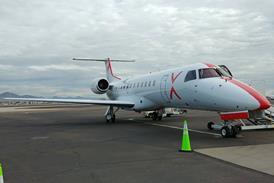
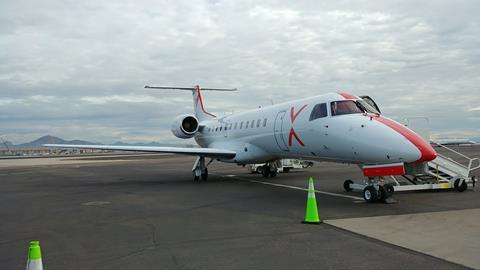
Those include JSX, which is financed partly by JetBlue Airways and United Airlines, serves dozens of destinations with about 50 Embraer ERJs and plans to acquire ATR turboprops. Others include ERJ operators Aero and Contour Airlines. In August, the Department of Transportation approved SkyWest Charter, a division of regional airline company SkyWest, as a public charter.
Those carriers insist they are safe and say they provide critical air links to small US communities, which have broadly lost air service in recent years. They have many supporters. JSX has said it sees significant room to expand.
DIVIDED INDUSTRY
ALPA, American and Southwest – two airlines with substantial operations in JSX’s home city of Dallas – have urged the FAA to close what they call a regulatory “loophole” that permits public charters to operate to an alleged lesser degree of safety.
“The current loophole introduces unnecessary risk to passengers and the system,” ALPA told the FAA in a comment.
JetBlue and United, however, support public charters. In comments to the FAA, United warned the FAA to be “wary of commercial agendas masquerading as safety and security arguments”, while JetBlue called JSX a disruptor and said regulatory changes could put it “out of business”.
JSX also lobbied against the FAA’s now-stalled rule-change initiative.
Meeting with FAA officials in July 2024, JSX chief executive Alex Wilcox warned that the proposed changes would “hamper JSX’s ability to secure financing and… jeopardise their business model”, an FAA memorandum says.
In April this year, a JSX lobbyist urged the FAA’s then-acting administrator Chris Rocheleau to remove the initiative entirely from the agency’s agenda, citing President Trump’s deregulation executive order.