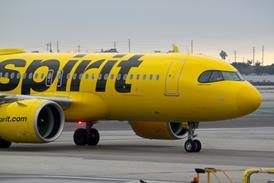
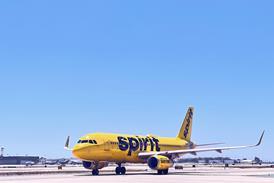













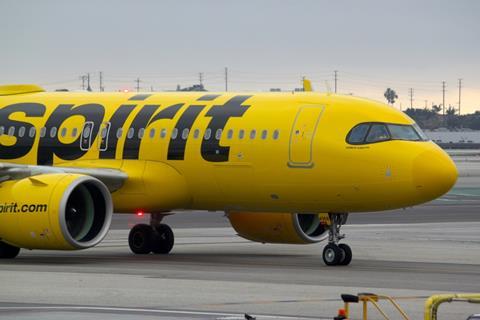
Spirit Airlines has committed to retaining up to 28 A320neos and A321neos, along with up to 78 older A320-family jets, upon emerging from Chapter 11 bankruptcy proceedings – a substantial reduction from its current inventory.
Operating a total of up to 106 aircraft would represent less than half of Spirit’s most recently cited fleet figures. The airline says it could cut its fleet as low as 88 jets.
While Spirit has been rejecting the leases of dozens of Airbus narrowbody jets in recent months, it was until now unclear how many aircraft the carrier would ultimately operate once dust settled on its fleet-reduction efforts.
The airline’s vision for post-bankruptcy operations is strikingly diminished, as Spirit was the largest ultra-low-cost carrier (ULCC) in the USA, at one point in 2024 reaching a 230-strong fleet of Airbus narrowbodies.
It appears that Las Vegas-based ULCC Allegiant Air – once considered a relatively small competitor – has already overtaken Spirit in terms of fleet size. Fleets data from aviation analytics provider Cirium show Allegiant currently operating 124 in-service aircraft, while Spirit now has 117 jets in service.
As of 2 December, Spirit said it maintains a fleet of 214 Airbus jets. However, Cirium lists nearly 100 Spirit jets as “in storage”, meaning they have been parked for more than 30 days – likely awaiting return to lessors.
Spirit disclosed its post-Chapter 11 aircraft engine and retention plan in a restructuring term sheet with International Aero Engines (IAE), a Connecticut-based joint venture between Pratt & Whitney, MTU Aero Engines and Japanese Aero Engine Corporation.
The term sheet was filed on 3 December with the US Bankruptcy Court of the Southern District of New York.
Notably, IAE supplies PW100G turbofans, which have been the subject of a massively disruptive global recall by P&W to address potential manufacturing defects in fan blades. IAE also supplies IAE V2500 engines, which power older A320s.
Spirit has struggled since 2023 with dozens of A320neo-family jets grounded for required repairs.
As part of the term sheet, IAE has agreed to provide Spirit $140 million in compensation for “prior losses” related to Spirit’s grounded jets for P&W geared turbofan (GTF) engine inspections and repairs, along with ongoing access to spare engines to power the airline’s remaining A320neo and A321neo fleet.
Spirit has been aggressively shedding metal amid a dramatic capacity reduction intended to right-size capacity to demand, rejecting the leases of dozens of Airbus jets. Throughout that process, it has been apparent that the company is seeking to radically reduce its GTF burden by returning a disproportionate percentage of A320neo-family jets.
Most recently, it disclosed plans to reject the leases of an additional 11 A320neos and older A320s. The airline lists “effective dates of rejection” ranging from mid-December to mid-February.
Chief financial officer Fred Cromer called the aircraft in question “nothing more than a cash drain” in a 2 December filing.
”While negotiations with the lessors… is ongoing, based on the current status of such negotiations, this excess equipment, I believe, is not necessary for Spirit’s continued operation or successful reorganisation,” he says.
Spirit has posted losses in 14 of the past 15 quarters, according to Airline Business data, including a $317 million loss in the third quarter.