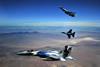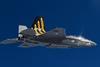









The US Air Force plans to install a new tactical radar and sensors on the specially modified Lockheed Martin F-16 fighter used for testing pilotless air combat.
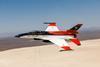
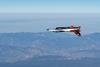
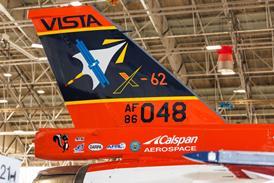
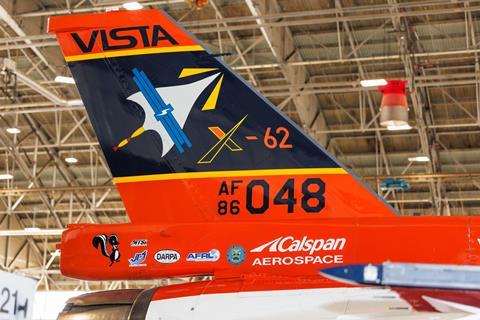
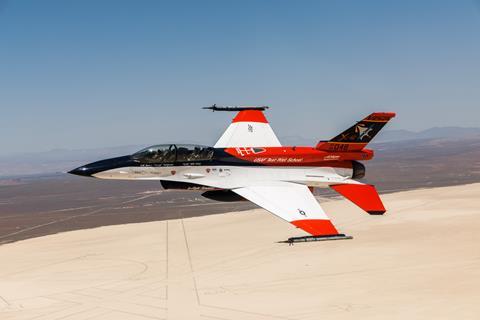
Known as the X-62 Variable Stability In-flight Simulator Test Aircraft (VISTA), the test aircraft is based on a two-seat F-16D Block 30 fighter that was previously upgraded with 1980s-era Block 40 avionics.
The USAF describes the orange-and-white jet as the “cornerstone of the air force’s pursuit of artificial intelligence integration in military aviation.”
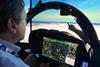
In 2024, the service and the Defense Advanced Research Projects Agency used the X-62 to test the ability of artificial intelligence software to autonomously engage in aerial combat manoeuvres, including within visual range dogfighting.
Now, the Pentagon’s Test Resource Management Center will provide unspecified funds for the X-62 to be equipped with modern sensors, including Raytheon’s latest PhantomStrike active electronically scanned array (AESA) radar.
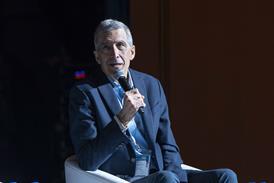
“The mission systems upgrade enables X-62 to continue the journey in developing breakthroughs in artificial intelligence and autonomy, says Colonel Maryann Karlen, commandant of the Air Force Test Pilot School.
The X-62 is assigned to the TPS research division at Edwards AFB in California.
The upgrade deal is a significant win for Raytheon, which has been hunting new customers for the PhantomStrike, which the defence manufacturer describes as a low-cost, light weight multi-function radar designed for smaller fighters and uncrewed tactical aircraft.
“Autonomous aircraft are poised to play a key role in helping the US maintain air superiority, and Raytheon’s PhantomStrike radar is uniquely designed to help them do it,” says Dan Theisen, president of advanced products & solutions for Raytheon.
The air-cooled PhantomStrike weighs in at just 68kg (150lb), making use of high-efficiency gallium nitride (GaN) antennas that offer improved power and range over existing gallium arsenide radars.
Raytheon says the PhantomStrike is available at a cost of roughly half that of other AESA radars currently available.
That new sensor will allow the air force to continue advancing the development artificial intelligence software that will eventually power new fleets of autonomous combat jets.
The Hivemind AI agent that flew the X-62 during the 2024 dogfighting experiments was developed by Shield AI – which has since become one of the go-to providers of autonomy software for major defence contractors.
The company also develops its own autonomous aircraft, such as the V-Bat UAS that has seen combat service in Ukraine.
Shield AI has also reportedly been tapped by the USAF to be an autonomy provider for the service’s burgeoning Collaborative Combat Aircraft (CCA) uncrewed fighter programme – software which was first tested on the X-62.
The USAF says its planned radar and sensor improvements to the F-16-drivative will the allow the X-62 to engage in more complex scenarios, further testing the ability of AI to make decisions in real time.
“As the Air Force expands its exploration of integrating autonomy into air and space operations, the X-62 is the bridge between the historical human-centred approach and tomorrow’s integration of uncrewed combat aviation,” says TPS commandant Karlen.
Two autonomous-capable prototype designs are currently in flight testing under increment one of the air force’s CCA programme: the General Atomics YFQ-42A and the Anduril YFQ-44A.
The service has said it plans to select one of the two for procurement sometime around the third quarter of 2026.