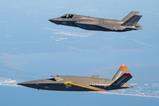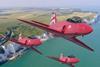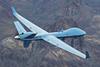











Although it is likely still several years from fielding an operational aircraft, the US Navy (USN) has begun the process of developing new tactics incorporating autonomous fighter jets.
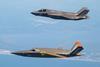
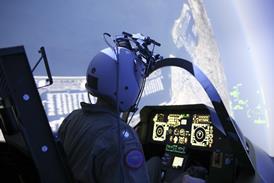
The Naval Air Warfare Center on 5 January said it has digitally integrated so-called Collaborative Combat Aircraft (CCAs) with Lockheed Martin F-35 stealth fighters inside the advanced virtual test range known as the Joint Simulation Environment (JSE).
The JSE was conceived as part of the F-35 acquisition programme as a network of high fidelity flight simulators that would allow operators to fully test the fifth-generation jet’s array of classified sensors and mission systems.
Activating those secretive onboard systems in an open air exercise could allow foreign adversaries to collect data on the electronic emissions and potentially determine the capabilities and limitations of the F-35.
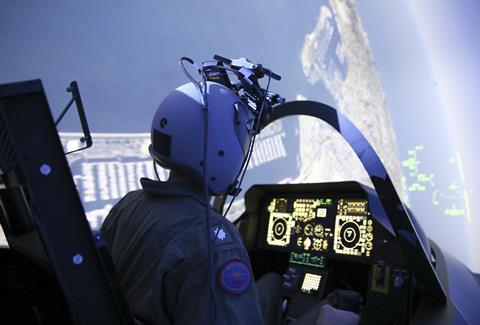
Now, the USN is leveraging the JSE’s modeling and simulation potential to help develop tactics and operational concepts for pairing uncrewed CCAs with its conventional fighters.
“Modern warfare is demanding more from our aviators,” says Rear Admiral Todd Evans, commander of the Naval Air Warfare Center’s Aircraft Division. “This milestone shows the Joint Simulation Environment’s impact on equipping them with the advanced tactics they need to win future battles.”
As part of the exercises, F-35 pilots took control of multiple simulated CCAs while flying their own jets inside the JSE. Issuing commands to the autonomous vehicles via touchscreen tablet, human aviators were able to engage threats with guided missiles.
The navy’s experiment with CCAs comes as the service has begun the process of developing its first uncrewed fighter.
In September 2025, the navy issued an initial round of development contracts to several US defence manufacturers to fund early-stage work on designs for a semi-autonomous tactical jet capable of operating from the USN’s fleet of aircraft carrier ships.
Among the firms selected for the navy CCA effort were Anduril Industries, Boeing, General Atomics Aeronautical Systems, and Northrop Grumman.
Three of those – Anduril, General Atomics and Northrop – are already engaged in similar work developing land-based CCAs for the US Air Force (USAF). Meanwhile, Boeing has partnered with the Royal Australian Air Force (RAAF) to develop a CCA for that service: the MQ-28A Ghost Bat.
Both the Australian and USAF programmes have advanced into initial flight testing, with procurement decisions looming in the near future.
For its part, the USN has previously said its future carrier air wings could be comprised of up to 60% unmanned platforms.
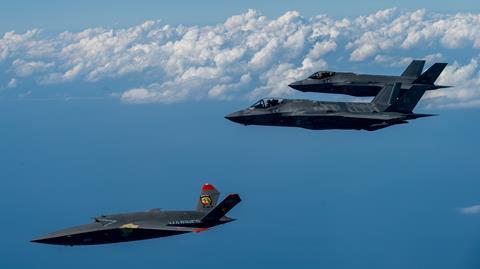
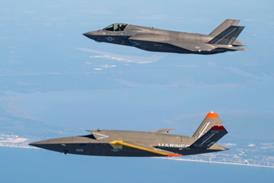
Elsewhere, the US Marine Corps (USMC) on 8 January announced the selection of its first CCA – a version of the Kratos XQ-58 Valkyrie that will feature a package of mission systems and combat sensors designed and integrated by Northrop.
Both the USMC and USAF have previously used the XQ-58 as a surrogate vehicle for developing and testing the onboard control systems needed to integrate CCAs with conventional fighters.
Various exercises have seen the uncrewed Valkyrie paired with Marine Corps F-35Bs, Boeing F-15Es and Lockheed F-16Cs in real-world flying.
The roster of CCA-enabled aircraft is set to expand in the coming years.
The USN says it plans to expand the JSE to support testing and integration with its workhorse Boeing F/A-18E/F strike fighter and EA-18G electronic attack jet throughout 2026 and 2027.
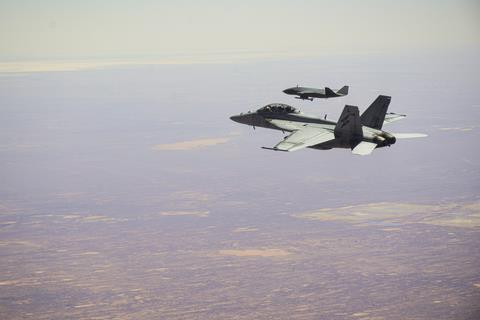
Australia has already demonstrated the ability of the F/A-18 to team with a CCA in physical flight. An exercise in December saw one of the RAAF’s Super Hornets pass targeting data to an autonomous MQ-28, which destroyed the target with a guided missile shot.
Support aircraft will also likely see some level of pairing with the CCAs, such as the Northrop’s carrier-capable E-2D Advanced Hawkeye. The turboprop that provides airborne early warning and control support to USN carrier air wings is also scheduled for JSE integration.
Meanwhile, Australia has already begun testing methods for pairing its Ghost Bat CCA with the RAAF’s Boeing E-7A airborne early warning and control jets.